All work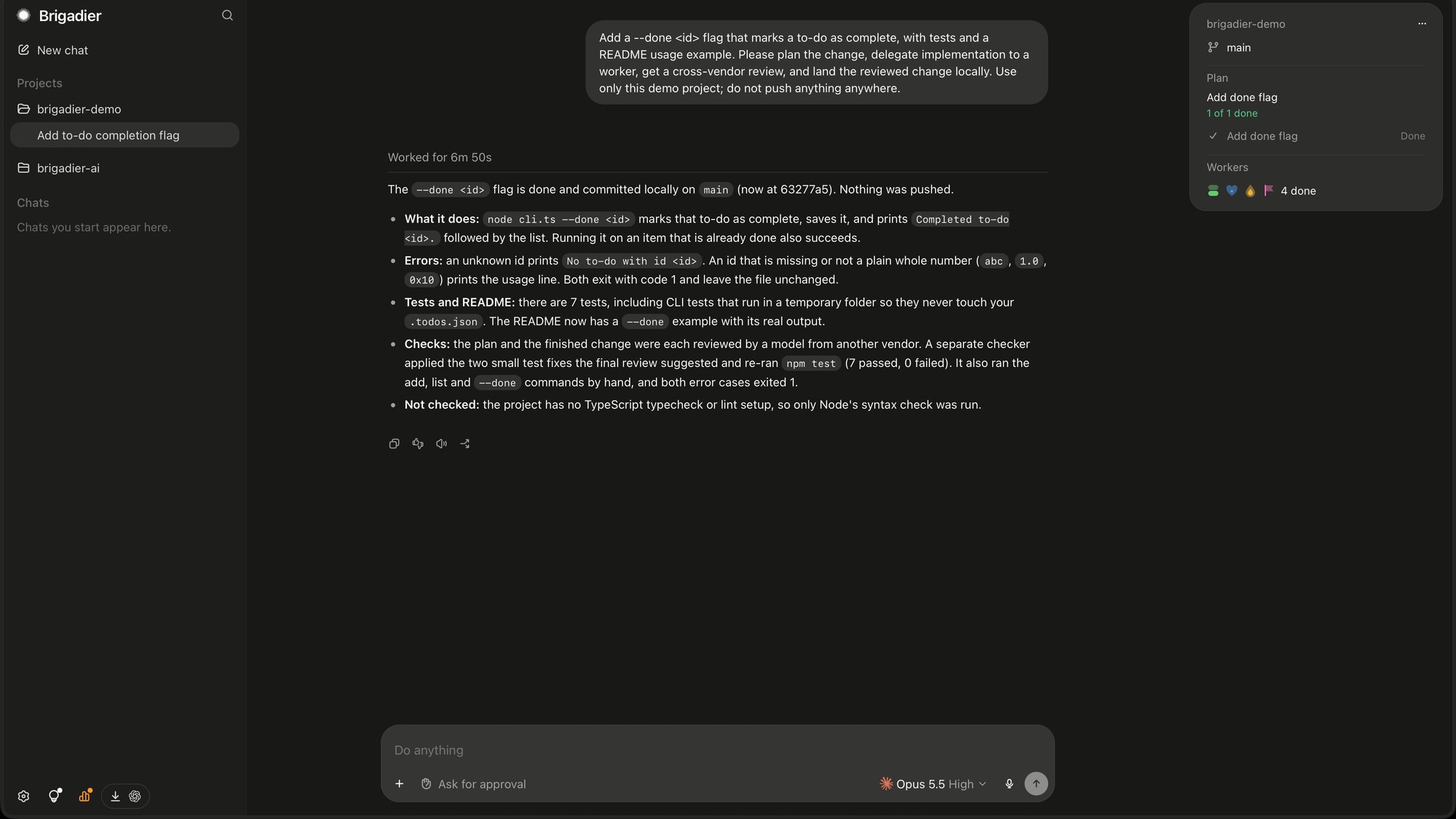
Syncra productPublic on GitHubIn development
Brigadier
A team of AI coding agents, run from your own machine.
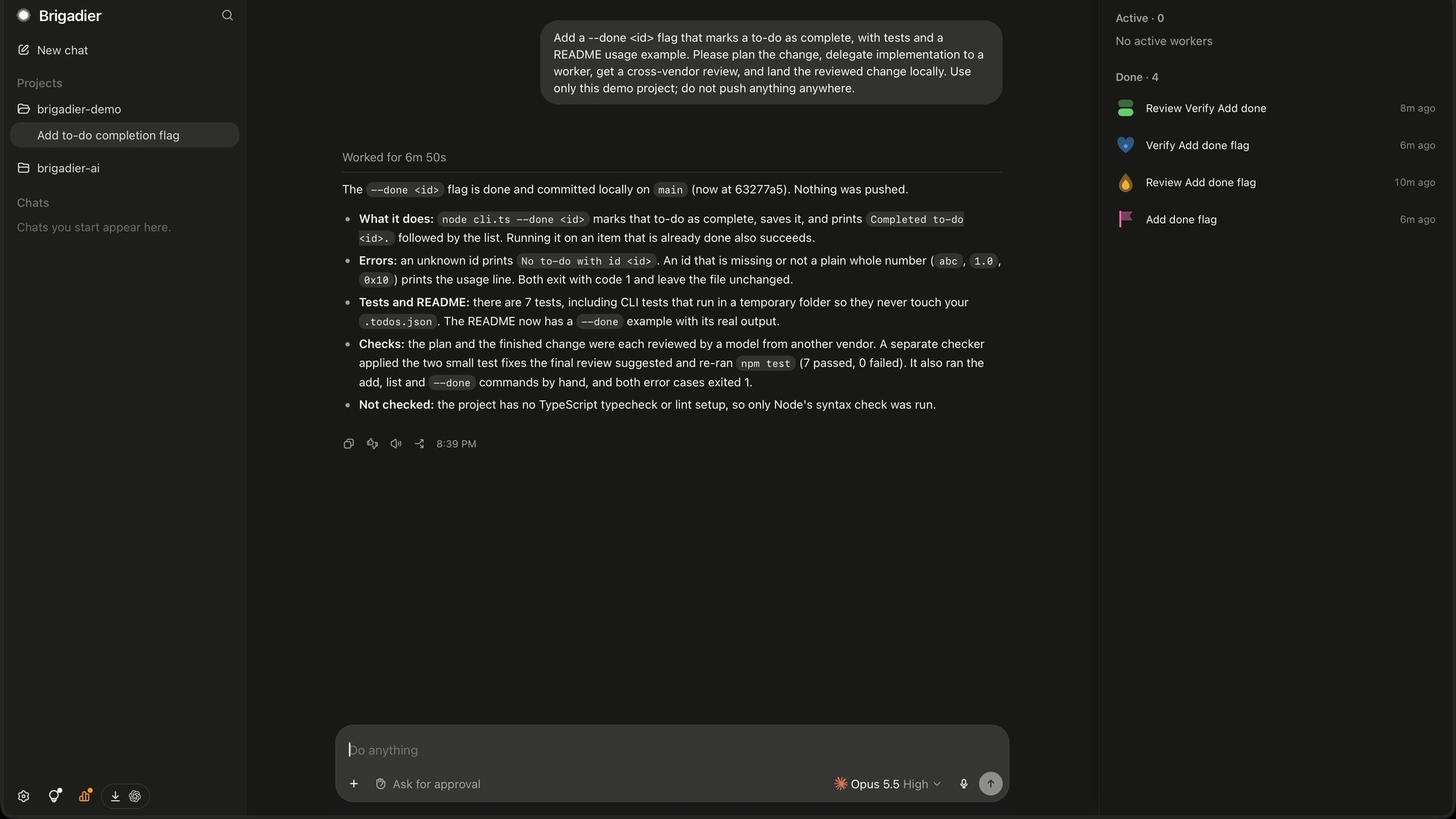
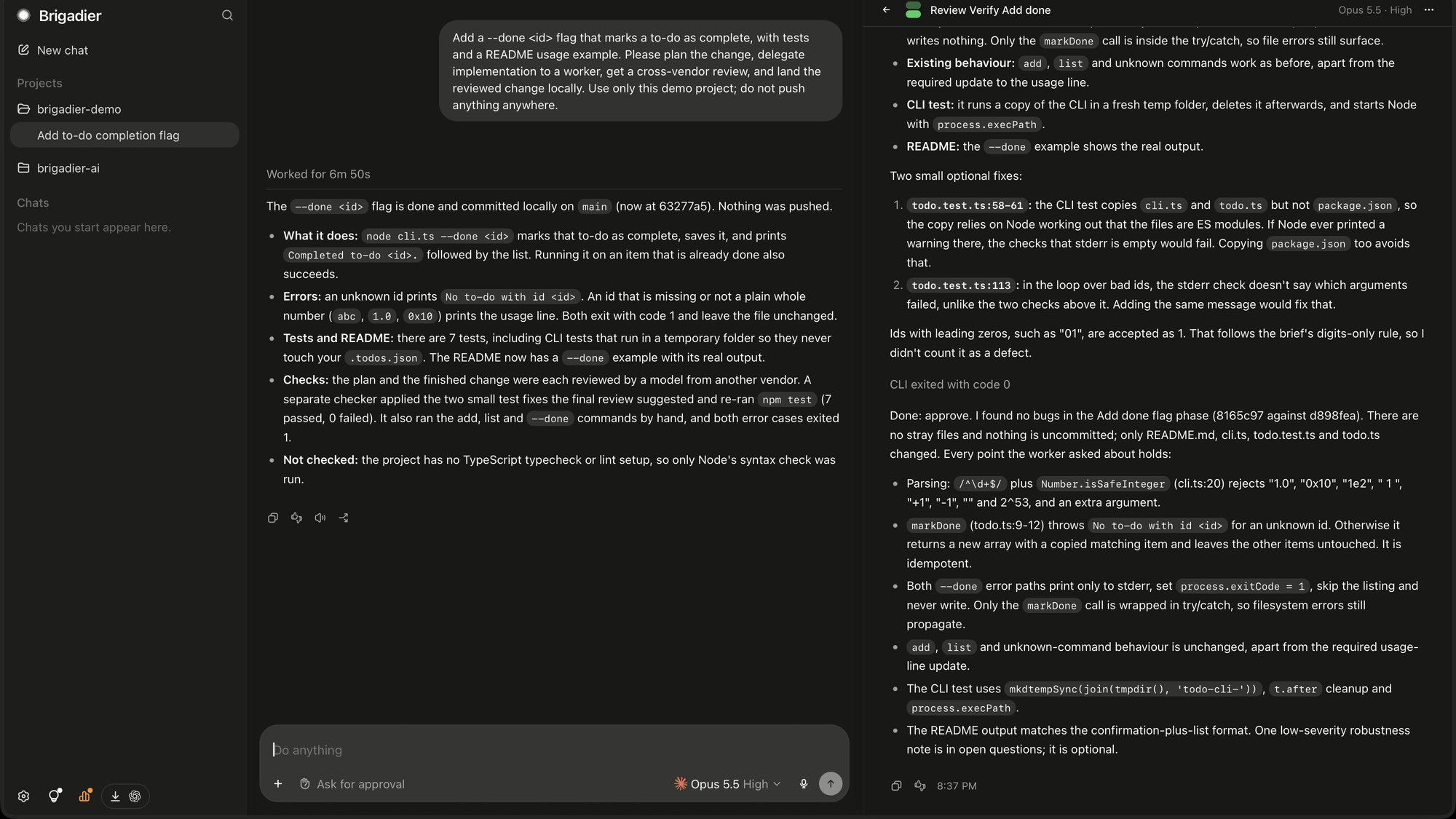
A local-first desktop app for long-running AI coding sessions. You talk to one orchestrator; it plans the work, hands tasks to the Claude Code and Codex agents already on your computer, has the work reviewed by the other vendor's model and lands it as a clean commit. Its source is public on GitHub.
How it works
- You talk to one orchestrator. It plans the work and delegates it, but never reads the repository, runs a command or edits a file itself.
- The workers are the coding agents already installed and signed in on your machine, Claude Code and Codex to start with.
- Workers that change code run in isolated git worktrees.
- Work is reviewed by a different vendor's model: Claude's work by Codex, Codex's by Claude. A phase of multi-step or risky work ends with a fresh verifier that runs that review itself; a small request gets the same cross-vendor review on its own diff.
- Finished work lands as a clean commit.
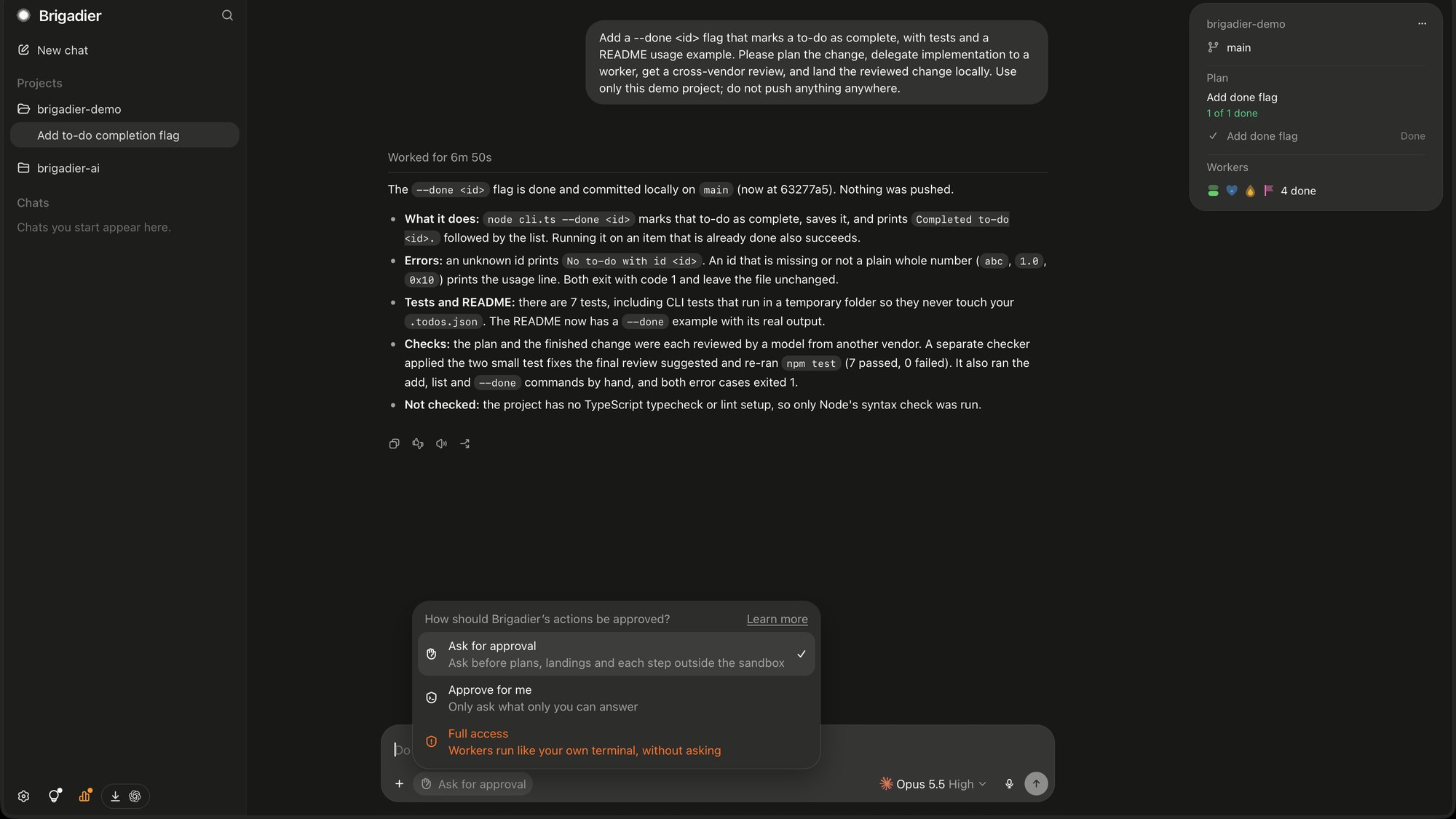
- Choose Ask for approval, Approve for me or Full access in the composer.
Local and private
- No Brigadier backend, no account and no telemetry.
- It drives the claude and codex command-line tools exactly as they are installed on your machine, and never reads their credentials.
- Your conversations and what Brigadier learns about your project stay on your computer.
- Your code goes only to the model providers your claude and codex tools already talk to.
Built with
- A Rust daemon, brigadierd, that keeps running when the window closes
- A Tauri 2 desktop shell with a React interface
- A local SQLite event store
- Authenticated local IPC, with no network listener by default
Where it stands
Brigadier is in development and isn't ready for general use yet. The source is public on GitHub, and the plan in its repository describes where it is going: macOS first, then Windows and Linux.
From our notes
Orchestrating AI coding agents: lessons from building BrigadierOne coding agent in a terminal is easy to supervise. Several working in parallel need structure: who plans, who edits, how work comes back and how it lands. These are the design decisions behind Brigadier.